
Pavlok Review (2026): Can Electric Shocks Actually Break Bad Habits?

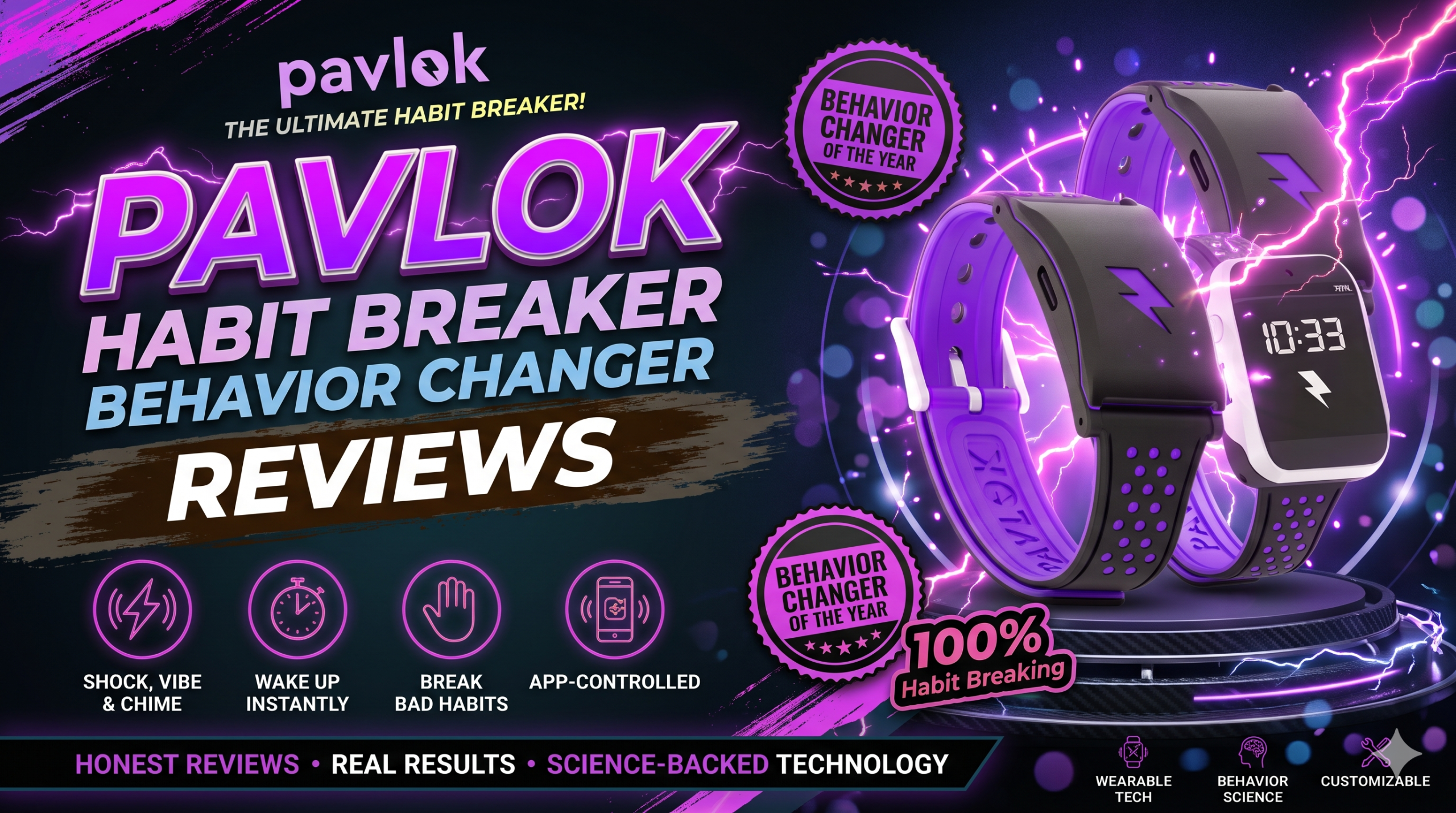
Human willpower is notoriously fragile when facing instant gratification. Whether it is sleeping through three consecutive alarms, mindlessly chewing fingernails during zoom calls, or opening social media tabs when a deadline looms, the human brain consistently prioritizes immediate dopamine over long-term goals.
Wearable habit-modification technology aims to interrupt this cycle. The Pavlok (and its dedicated alarm counterpart, the Shock Clock) takes a controversial, radically physical approach: aversion conditioning via mild electric shock.
Originally founded by Maneesh Sethi, Pavlok has evolved over a decade from an eccentric crowdfunding experiment into a multi-device ecosystem featuring motion tracking, browser monitoring, and programmable smart integrations.
Yet strapping a battery-powered electrode to your wrist and voluntarily electrocuting yourself sounds drastic. Does Pavlok actually deliver enough neurological friction to rewire deeply ingrained subconscious habits? Is the electric zap safe, or is it merely an expensive tech gimmick that ends up tossed in a drawer?
This comprehensive, long-term review cuts through the hyperbole to examine sensory safety, software automation, sleep-waking reliability, and day-to-day usability.
1. The Science: How Aversion Conditioning Rewires the Brain
Pavlok bases its core engineering on classical Pavlovian conditioning and negative reinforcement principles:
- The Dopamine Loop: Habitual behaviors—such as reaching for sugary snacks, biting cuticles, or browsing Reddit—are driven by automatic neurological feedback loops. The brain associates the trigger with a quick hit of pleasure or anxiety relief.
- Introducing Aversive Stimuli: By pairing a negative habit with an immediate, uncomfortable physical deterrent (an electric shock or “zap”), the brain begins associating that formerly pleasurable behavior with discomfort. Over multiple repetitions, the subconscious mind flags the action as undesirable, short-circuiting the compulsion before it fully manifests.
- The Progressive Warning Ladder: Pavlok does not jump straight to electric shocks unless configured to do so. The hardware features a three-tier haptic system:
- Chime: An audible acoustic alert signaling boundary crossing.
- Vibration: A firm tactile buzz prompting mindful behavioral pause.
- The Zap: The final electric stimulus deployed when the warning goes unheeded.
2. The Electric Shock: Sensory Experience, Voltage, and Safety
The foremost question prospective users ask is simple: Does the shock hurt, and is it dangerous?
Technical Specifications & Electrical Safety
- Peak Output Voltage: Adjustable from 50 volts up to 340 volts.
- Current & Amperage: Discharged in ultra-low micro-amperes over brief microsecond pulse waves.
- Safety Context: A standard police conductive energy device (Taser) discharges upwards of 50,000 volts designed to induce neuromuscular incapacitation. Pavlok’s 340-volt maximum pulse delivers localized cutaneous stimulation across the surface of the wrist without penetrating deep tissue or affecting cardiovascular rhythms.
What Does the Zap Actually Feel Like?
The sensation is sharp, abrupt, and impossible to ignore. It closely mirrors a concentrated static shock from a metal doorknob in the dead of winter, or snapping a taut rubber band forcefully against bare skin.
The physical pain is instantaneous and dissipates the split second the circuit breaks, leaving no residual burning or tissue damage.
Crucially, the psychological anticipation of the shock is far more potent than the shock itself. Knowing that a zap is pending creates genuine alertness, forcing unconscious, mindless behaviors into conscious awareness.
Through the Pavlok companion app, users can dial the intensity from 10% (a light, prickling tingle) to 100% (an intense, startling jolt). Most users find their behavioral threshold between 40% and 70%.
3. Real-World Tracking: Automated vs. Manual Zapping
A common misconception is that Pavlok contains omniscient sensors capable of knowing whenever you eat chocolate or procrastinate. In reality, habit management divides strictly into automated triggers and conscious manual input.
Where Pavlok Is Fully Automated
- The Silent “Shock Clock” Alarm: The absolute standout application for the device. If audio chimes fail to wake you, the wristband vibrates, sounds a tone, and ultimately administers progressive electric shocks until you get out of bed. To turn off the alarm, the companion app can require you to scan an off-limits QR code in another room or complete physical jumping jacks tracked via the internal accelerometer.
- Web Productivity & Tab Control: Through the Pavlok Chrome extension, users can set hard limits on daily time sinks (e.g., YouTube, X/Twitter, Reddit) or cap active browser tabs. Exceeding your limit triggers an immediate deterrent zap through your desktop connection.
- Hand-to-Face Gestures: Using internal motion sensors, the device can detect sudden vertical arm elevation toward the face. While calibration requires patience, it provides reliable warning vibrations to disrupt chronic fingernail biting, skin picking, or hair pulling.
- Smart Home & Workflow Triggers (IFTTT / Zapier): Advanced users can tie electric stimulus to automated external data streams—such as zapping you if you leave your house late for the gym according to your phone’s GPS, or if your daily step count lags behind schedule by 8:00 PM.
Where Pavlok Requires Manual Discipline
For dietary slip-ups, smoking, or negative internal thought spirals, the device relies on self-administered zapping via the hardware’s center button or in-app trigger.
Self-administering discomfort requires upfront commitment. However, because users have invested financial capital into breaking a habit, voluntary compliance is surprisingly high among motivated individuals who use the zap to snap out of emotional eating or smoking triggers.
4. Hardware Ergonomics, Build Quality, and Battery Life
- Chassis & Aesthetic Design: The core electronics module is a dense, utilitarian cuboid slotted into a thick silicone or sports wristband featuring an embossed lightning bolt. It favors tactical, durable function over the sleek luxury aesthetics of modern Apple or Garmin smartwatches.
- Skin Comfort: The silicone strap holds the dual underside contact electrodes firmly against the skin. During intense summer heat or rigorous workouts, moisture buildup under the band can require regular wiping to prevent skin chafing.
- Battery Endurance: Under typical daily use (utilizing the morning alarm and 15 to 25 daily deterrent zaps), a full charge delivers 3 to 5 days of runtime. The internal cell supports roughly 150 to 200 high-voltage discharges before requiring a recharge via its dedicated USB charging interface.
- Bluetooth Syncing: The mobile companion app (iOS and Android) offers robust habit customization and firmware tuning. While background Bluetooth handshakes can occasionally drop if phone battery-saver modes are aggressive, local alarms and sensor triggers stored on the hardware module fire independently without requiring an active smartphone link.
5. Comparative Evaluation: Pavlok vs. Traditional Smartwatches
| Feature / Capability | Pavlok 3 / Shock Clock 3 | Standard Smartwatch (Apple Watch / Fitbit) |
| Alarm Deterrent Mechanism | Vibration, Loud Chime, Electric Shock | Gentle Vibration, Audio Chimes |
| Heavy-Sleeper Success Rate | Near 100% (Physiologically impossible to sleep through) | Moderate (Easily snoozed or ignored) |
| Behavioral Conditioning | Negative tactile reinforcement (Aversion therapy) | Passive digital notifications / Goal badges |
| Productivity Enforcement | Automated browser tab caps & site-block zaps | Screen time alerts (Easily dismissed) |
| Biometric & Health Tracking | Basic step count and sleep phase logging | Comprehensive ECG, SpO2, HRV, Sports GPS |
| Visual Styling | Utilitarian, functional tech wristband | Sleek, high-resolution aesthetic watch |
6. Honest Pros and Cons
Advantages
- Unbeatable Wake-Up Guarantee: The single most reliable physical alarm clock on the market for chronic oversleepers and shift workers.
- Proven Behavioral Friction: Disrupts mindless physical compulsions (nail biting, cheek biting, smoking) through immediate conditioned awareness.
- Granular Intensity Control: Easily calibrated from gentle sensory buzzes to intense, startling electrical bursts.
- Extensive Productivity Integrations: Seamlessly connects with IFTTT, Zapier, and desktop browser extensions to enforce digital focus.
- Accountability Options: Supports remote pairing, allowing an accountability partner or coach to trigger prompts if needed.
Considerations
- Manual Input Demands Commitment: Dietary and behavioral habits lacking automated sensor profiles require honest, self-administered button presses.
- Utilitarian Form Factor: Not designed as a luxury fashion accessory; aesthetics lean practical and rugged.
- Sensory Learning Curve: Finding your personal balance between an effective behavioral deterrent and excessive discomfort takes a few days of experimentation.
7. The Final Verdict: Is Pavlok Worth It?
Pavlok is an unapologetically unconventional tool built to solve problems that standard notification buzzes fail to fix.
It Is an Outstanding Investment If:
- You are an extreme heavy sleeper who routinely sleeps through phone alarms, misses work shifts, or abuses the snooze button.
- You need rigorous physical disruption to break unconscious body-focused repetitive behaviors (nail biting, hair pulling, facial touching).
- You work at a computer and struggle with catastrophic digital procrastination across social media and browser tabs.
- You want hard, physical accountability to anchor your morning routines.
You Should Pass If:
- You want a sophisticated, screen-rich smartwatch primarily for heart health, athletic pacing, and replying to text messages.
- You have a medical pacemaker, implantable cardioverter-defibrillator, or serious underlying cardiac conditions (contraindicated for electric pulse devices).
- You lack the baseline discipline to manually shock yourself when breaking non-automated dietary habits.
For those whose personal goals have stalled against weak willpower, Pavlok’s sudden burst of physical electricity offers an effective, science-backed shortcut to taking control of your daily routine.
👉 Shop the Official Pavlok Store & Claim Your 10% Discount Now
Frequently Asked Questions
Can the Pavlok shock cause burns or permanent skin damage?
No. Pavlok discharges electricity in brief, pulsed microsecond bursts designed to stimulate sensory nerve endings without transferring thermal energy. It does not cause cutaneous burns or tissue scarring. Users with sensitive skin should periodically clean the underside electrodes to prevent sweat salt buildup from causing friction irritation.
Is Pavlok waterproof?
Modern Pavlok devices (including Pavlok 3 and Shock Clock 3) feature basic water-resistant ratings suitable for daily sweat, rain, and hand washing. However, submerging the device in deep water, wearing it while swimming laps, or exposing it to hot, high-pressure shower water is not recommended.
How does the Shock Clock ensure you cannot simply turn it off and go back to bed?
The companion app includes built-in wakefulness verification protocols. You can configure the alarm so that turning off the morning zap requires completing active jumping jacks (monitored by the onboard accelerometer) or physically getting out of bed to scan an adhesive QR code positioned across your house in your bathroom or kitchen.
How long does it take to break an unconscious habit?
Conditioning timelines vary depending on the frequency of the behavior. High-frequency physical habits like unconscious nail biting or face touching often drop dramatically within 5 to 14 days of diligent negative reinforcement, as the subconscious mind rapidly learns to associate the early motor pattern with an impending tactile deterrent.


