
Wonderfold Wagon Reviews (2026): Is This Heavy-Duty Stroller Wagon Actually Worth It?

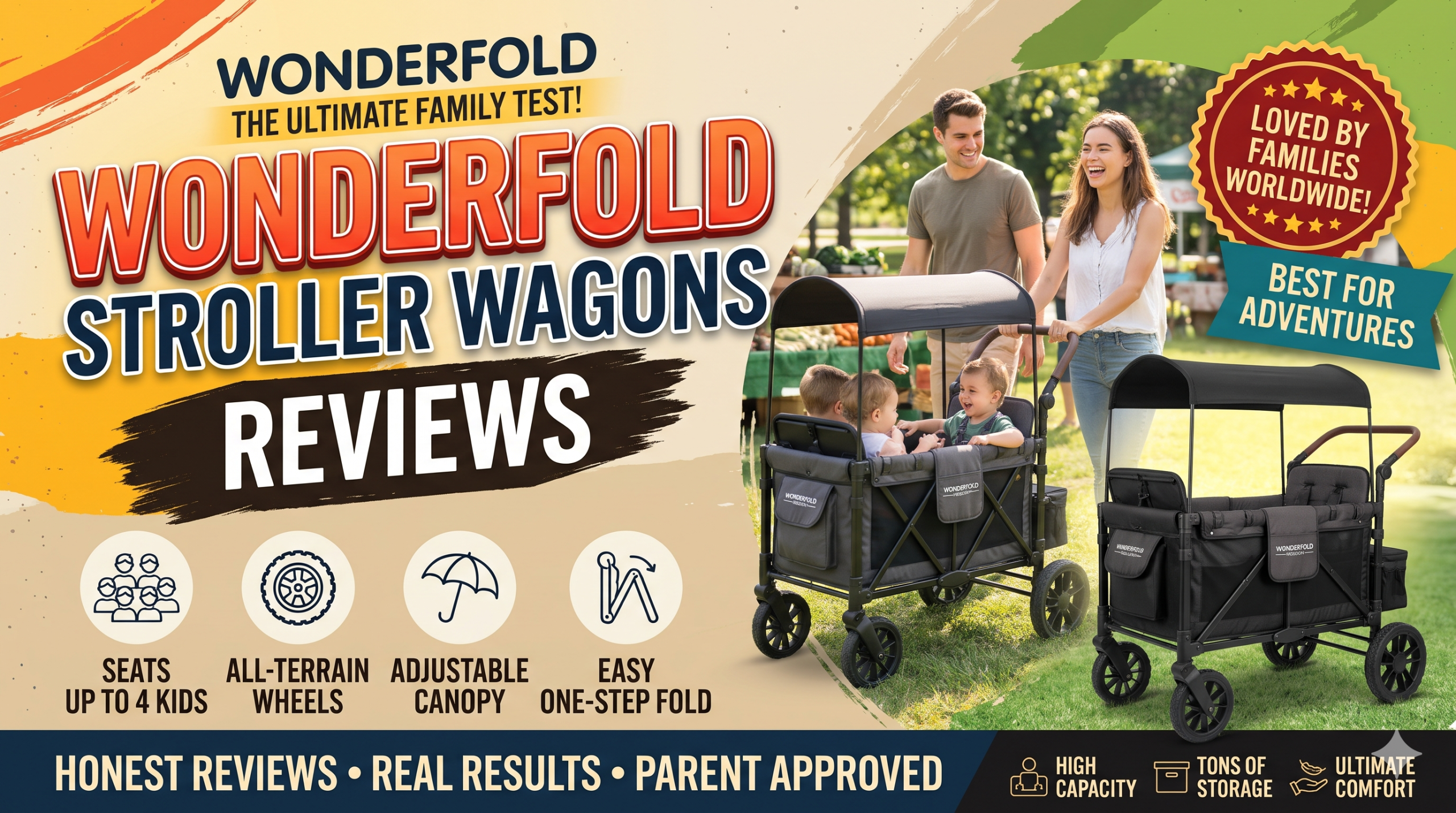
If you have spent any time recently at a zoo, a sports complex, or a regional park, you have almost certainly spotted one: a high-walled, fabric-sided rolling fortress packed with multiple toddlers, snack cups, diaper backpacks, and outdoor blankets.
Stroller wagons have officially transitioned from a niche parenting novelty into a staple of modern family logistics. Within this category, Wonderfold has established itself as the benchmark. Frequently referred to as the “minivan of kid gear,” it attracts parents managing two, three, or four young children, earning fierce brand loyalty while sparking consistent debate over its substantial footprint and premium price tag.
Investing between $400 and $900 in family transportation gear requires careful consideration. A heavy-duty stroller wagon is not an impulse purchase—especially when dealing with a product that can weigh as much as 60 pounds unloaded.
This comprehensive review evaluates the Wonderfold system across paved sidewalks, steep hills, gravel trails, and crowded events to determine how the build quality, handling, trunk compatibility, and everyday ergonomics hold up in real-world use.
1. The Stroller-Wagon Hybrid: What Does It Actually Replace?
A stroller wagon is neither a deep utility cart nor a traditional stroller with raised fabric panels. It is a dedicated hybrid engineered to merge the structural safety and harness system of an ASTM-certified stroller with the interior volume and utility of a cargo wagon.
THE 3-IN-1 CONSOLIDATION ADVANTAGE
┌────────────────────────────────────────────────────────┐
│ TRADITIONAL DOUBLE/TRIPLE STROLLER │
│ • Rigid, inline or wide side-by-side seating │
│ • Strict weight caps (often 40–50 lbs per seat) │
│ • Children ride isolated or facing forward/backward │
└────────────────────────────────────────────────────────┘
 VS.
┌────────────────────────────────────────────────────────┐
│ WONDERFOLD STROLLER WAGON │
│ • Inward-facing bench seats (encourages interaction) │
│ • High structural limits (180 to 300 lbs total) │
│ • Drop-down deep footwell (converts to flat playpen) │
│ • Transports kids, bulk cargo, and gear together │
└────────────────────────────────────────────────────────┘
The Face-to-Face Seating Dynamic
The most noticeable shift when moving from a traditional inline or side-by-side double stroller is the behavioral dynamic among the passengers. In a standard tandem stroller, one child typically stares directly into the fabric back of their sibling’s seat, while side-by-side models can lead to elbowing and territorial squabbles over shared armrests.
In a Wonderfold, children sit face-to-face on elevated bench seats. Siblings can share snacks, interact with toys on an optional center tray, or pass books back and forth. For families raising twins, triplets, or children spaced close in age, this layout keeps kids occupied and content for much longer stretches during extended outings.
The Rolling Playpen & Cargo Hauler
When naptime arrives during an all-day festival or park visit, the raised seats unclip within seconds. The deep, flat floor immediately converts into a shaded, secure enclosure where a tired toddler can stretch out flat to rest.
Long after your children outgrow the need to be pushed, the reinforced chassis allows the wagon to be repurposed indefinitely for hauling folding sports chairs, beach equipment, camping supplies, or heavy grocery runs.
2. Navigating the Lineup: W-Series vs. X-Series vs. L-Series
The Wonderfold catalog spans several distinct model tiers designed for different family sizes, terrain demands, and budgets:
WONDERFOLD MODEL ARCHITECTURE
├── W-SERIES (High-Walled, Deep Footwell, Removable Raised Seats)
│ ├── W2 Series (2-Passenger): Original, Elite, Luxe Pro
│ └── W4 Series (4-Passenger): Original, Elite, Luxe Pro
├── X-SERIES (Lighter, Shallower Classic Wagon Style, Push/Pull Handles)
│ ├── X2 Series (2-Passenger): Budget & Lightweight focused
│ └── X4 Series (4-Passenger): Compact Quad option
└── L-SERIES (Modernized Aluminum Flagship)
 └── L4 Series (4-Passenger): Lighter alloy frame, ultra-smooth push
The Flagship W-Series (W2 & W4)
The W-Series represents the brand’s core platform. It features deep side walls, removable raised seats, a drop-down center footwell for natural leg positioning, and a front zippered crawl-in door that lets toddlers climb in and out under their own power.
- W2 Models (2-Seater): Rated for up to 200 lbs total capacity. The W2 measures approximately 25 to 26 inches wide, allowing it to navigate through standard 30-inch interior doorways and retail aisles with room to spare. Base weight is roughly 47 lbs.
- W4 Models (4-Seater): Rated for up to 300 lbs total capacity (roughly 99 lbs per bench seat). Featuring two opposing benches to hold up to four children, it measures nearly 29 inches wide and weighs between 55 and 63 lbs depending on trim.
- Elite vs. Luxe Trims: The entry-level Original features basic wheels and standard strap buckles. The Elite adds height-adjustable canopy poles and standard five-point safety harnesses. The premium Luxe adds extra-large polyurethane (PU) all-terrain wheels, a vegan leather adjustable handlebar, and magnetic quick-release harnesses that make strapping in squirming toddlers fast and seamless.
The Lightweight X-Series (X2 & X4)
If hoisting a 55-pound wagon sounds unmanageable, the X-Series removes the deep footwell and raised bench system in favor of a shallower, classic utility-wagon body.
- The X2 (34 lbs) and X4 (41 lbs) are roughly 30% lighter than their W-Series counterparts.
- They include a telescoping pull handle on the front alongside a traditional rear push bar, making them significantly easier to lift into smaller vehicles.
The L-Series Flagship (L4)
The L4 represents Wonderfold’s modern engineering flagship. Constructed around a reinforced, lightweight aluminum alloy frame, it shaves roughly 10 pounds off the standard W4 Luxe while retaining the full 300-pound payload, delivering the smoothest manual push in the four-passenger category.
3. Real-World Handling: Pushing, Pulling, and Navigating Terrains
A stroller wagon can look sleek on paper, but physics takes over once you load it with multiple children, insulated water bottles, extra layers, and a diaper bag.
PULL/PUSH EFFORT BENCHMARK (LOADED WITH ~120 LBS OF KIDS & CARGO)
┌────────────────────────────────────────────────────────┐
│ Smooth Concrete / Paved Parkways: │
│ [★★★★★] Glides effortlessly; one-hand steering viable. │
├────────────────────────────────────────────────────────┤
│ Packed Dirt / Hard Turf: │
│ [★★★★☆] Smooth roll; requires two hands for sharp turns.│
├────────────────────────────────────────────────────────┤
│ Coarse Gravel & Tall Grass: │
│ [★★★☆☆] Rolling resistance increases; requires momentum.│
├────────────────────────────────────────────────────────┤
│ Soft Deep Sand (Dry Beach Dunes): │
│ [★★☆☆☆] Significant drag; must be pulled backwards. │
└────────────────────────────────────────────────────────┘
Paved Sidewalks and Level Ground
On flat, paved surfaces—such as neighborhood sidewalks, indoor shopping centers, aquariums, and paved zoo paths—the Wonderfold’s sealed ball-bearing wheel assemblies and front spring suspension deliver an exceptionally smooth push. Despite its mass, the wagon tracks straight and feels surprisingly responsive once rolling.
Hills and Inclines
Here is the candid reality: pushing a 60-pound wagon carrying 100 pounds of children up a steep incline requires serious physical effort. Mechanical measurements show an initial force requirement of roughly 15 pounds just to get a fully loaded W4 moving from a complete stop. If your daily walking route features rolling hills, anticipate using both hands and engaging your core.
Handling Strategy: Always place your heaviest child on the rear bench closest to the handlebar. Positioning the primary center of gravity near the rear axle significantly reduces steering resistance and makes popping the front casters over street curbs much easier.
Sand, Gravel, and Rough Ground
While the Luxe trim’s oversized PU tires handle hard-packed dirt, woodchips, and crushed gravel reliably, soft, dry beach sand remains a challenge. Because the wagon relies on narrow caster wheels rather than wide, balloon-style beach wheels, the front tires tend to sink into loose sand under heavy loads. If you need to cross dry beach dunes, drop the front pull handle, face backward, and pull the wagon behind you until reaching firm, damp sand near the shoreline.
4. Trunk Space Reality: Dimensions, Folding, and Daily Storage
Before ordering a Wonderfold, measure your vehicle’s cargo area rather than your doorway.
THE SUV / TRUNK COMPATIBILITY CHECK
┌────────────────────────────────────────────────────────┐
│ W4 FOLDED VOLUME: APPROX. 15.7 CUBIC FEET │
├────────────────────────────────────────────────────────┤
│ • Mid-Size / Large SUV (Highlander, Tahoe, Telluride):│
│ Fits upright or flat; leaves room for small bags. │
│ • Minivan (Odyssey, Pacifica, Sienna): │
│ Fits easily in deep rear cargo well behind 3rd row. │
│ • Compact Crossover (RAV4, CR-V, Rogue): │
│ Consumes 70–85% of trunk floor; tight clearance. │
│ • Standard Sedan Trunk: │
│ Generally a non-starter unless all wheels are pop- │
│ ped off and cargo opening is exceptionally wide. │
└────────────────────────────────────────────────────────┘
The Folding Process
Collapsing a Wonderfold W2 or W4 is a structured, two-handed operation:
- Unclip the central canopy poles and fold the fabric canopy flat.
- Pull the interior center floor strap upward to collapse the scissor-frame inward.
- Fasten the side security latches to lock the frame into its upright, standing fold.
The folded unit stands securely on its own wheels and can be guided behind you like a heavy piece of rolling luggage. However, lifting a 55- to 63-pound W4 Luxe off the pavement into a high SUV liftgate requires real strength. If you frequently load and unload your vehicle solo, consider the lighter X-Series or the two-seat W2.
👉 Shop the Wonderfold Best Sellers & Claim Your 10% Discount Now
5. The Theme Park Reality: The “Disney Rule” Explained
One of the most common points of confusion among prospective buyers is where stroller wagons are permitted to go.
AMUSEMENT PARK COMPLIANCE SUMMARY
┌────────────────────────────────────────────────────────┐
│ WALT DISNEY WORLD & DISNEYLAND RESORTS: │
│ ❌ STRICTLY PROHIBITED (Classified as wagons) │
│ • Policy: Wagons and stroller-wagons banned at gates. │
│ • Dimensions: Strollers must not exceed 31″ × 52″. │
│ • Exception: Certified Disability Access Services │
│ "Stroller as Wheelchair" medical tags ONLY. │
├────────────────────────────────────────────────────────┤
│ UNIVERSAL STUDIOS, ZOOS, AQUARIUMS & STATE FAIRS: │
│ ✔ WIDELY PERMITTED │
│ • Universal Orlando & Hollywood allow standard wagons.│
│ • Most municipal zoos, sports arenas, and county │
│ fairs actively welcome Wonderfold wagons. │
└────────────────────────────────────────────────────────┘
If your primary motivation for buying a stroller wagon is an upcoming vacation to Walt Disney World or Disneyland, do not plan to bring a Wonderfold into the theme parks. Disney strictly enforces its property rules: all wagons and hybrid stroller-wagons are prohibited, regardless of brand or harness type. Security personnel at entrance checkpoints measure strollers and turn wagons away.
However, outside of Disney properties, the landscape is very accommodating. Major theme parks like Universal Studios, SeaWorld, regional amusement parks (such as Busch Gardens and Dollywood), and virtually every public zoo, aquarium, and botanical garden in North America permit stroller wagons without issue.
6. Head-to-Head Comparison: Wonderfold vs. The Competition
| Comparative Metric | Wonderfold W4 Luxe | Veer Cruiser XL | Evenflo Pivot Xplore | Keenz 7S+ Wagon |
| Seating Capacity | 4 Passengers | 4 Passengers | 2 Passengers strictly | 4 Passengers |
| Maximum Weight Capacity | 300 lbs (High-load) | 250 lbs | 110 lbs (55 lbs/seat) | 300 lbs |
| Footwell Architecture | Deep Drop-Down Well | Shallow Drop-Down Well | Shared Center Well | Deep Drop-Down Well |
| Push / Pull Ergonomics | Superior Push (Stroller) | Superior Pull (Wagon) | Balanced Push/Pull | Balanced Push/Pull |
| Folded Volume | Large (~15.7 cu. ft.) | Very Compact (Flat fold) | Compact (Fits sedans) | Moderate |
| Canopy System | UPF 50+ Sliding Canopy | Individual Pop-Up Shades | Shared Reversible Visors | Retractable High Canopy |
| Primary Sweet Spot | Comfort, Napping, Big Families | Rugged Terrain & Sand | Budget-Friendly for 2 Kids | All-Around Practical Quad |
| MSRP Range | $599 – $899+ | $649 – $799+ | $319 – $399 | $449 – $549 |
7. Practical Accessories Worth Adding
Much like outfitting an outdoor vehicle, Wonderfold owners often treat their wagons as a modular platform. While the base wagon includes all necessary safety components, several add-ons noticeably improve day-to-day functionality:
- The Front Snack Tray: A practical upgrade for toddlers. It mounts securely across the center frame, providing dual cup holders and a flat, washable surface for snacks, fruit slices, and toys while in transit.
- The All-Weather Rain & Cold Weather Shield: A custom-fitted, transparent vinyl cover that zips around the canopy poles, sealing out wind, heavy rain, and chilly drafts during late-fall sporting events or sudden spring downpours.
- The Parent Console: Features insulated cup holders, a zippered compartment for keys and smartphones, and exterior mesh storage, securing directly to the push bar.
8. Honest Pros and Cons
Advantages
- Industry-Leading Weight Limit: The 300-pound rating on W4 models ensures the wagon remains functional long after children outgrow standard strollers (easily accommodating kids up to 6 or 7 years old).
- Social Seating: Inward-facing benches keep children engaged and interacting during long days away from home.
- Flat Nap Area: Removing the seats creates a clean, shaded space where young toddlers can nap comfortably on the go.
- Strong Resale Retention: Wonderfold wagons hold their value exceptionally well, frequently selling for 50% to 65% of original retail on secondary gear marketplaces after years of use.
- Independent Child Entry: The front zippered crawl-in door allows older toddlers to climb in and out by themselves, saving your back from repetitive heavy lifting.
Drawbacks
- Substantial Lift Weight: Ranging from 47 to 63 pounds, lifting the wagon in and out of a high SUV trunk can be physically taxing if done solo.
- Demands Cargo Space: The folded frame takes up the vast majority of a standard crossover trunk floor, limiting room for luggage on road trips.
- Restricted at Disney Parks: Prohibited under Disney resort stroller and wagon rules.
- Resistance on Dry Sand: While reliable on packed dirt and crushed stone, deep sand creates heavy drag unless pulled backward from the front handle.
9. Final Verdict: Who Should Buy It (and Who Should Pass)
The Wonderfold stroller wagon line is a purpose-built family hauler that offers tremendous daily utility under the right circumstances.
It Is the Right Choice If:
- You have two, three, or four young children (twins, triplets, or siblings close in age) between 6 months and 7 years old.
- You drive a mid-size to full-size SUV, minivan, or truck with generous cargo room.
- Your family spends substantial time at zoos, local parks, weekend sports tournaments, state fairs, or community markets.
- You want a single, heavy-duty investment that consolidates strollers, utility wagons, and gear haulers for the next 5 to 7 years.
You Should Pass If:
- You have only one child (a compact, lightweight single stroller handles daily errands with far less effort).
- You drive a compact sedan with a narrow trunk opening.
- You need to carry your stroller up several flights of apartment stairs daily or cannot comfortably lift 50+ pounds into a vehicle.
- Your primary destination is Walt Disney World or Disneyland.
When your lifestyle fits its capabilities, the Wonderfold is one of those rare family gear investments that genuinely simplifies managing multiple children outdoors.
👉 Shop the Wonderfold Best Sellers & Claim Your 10% Discount Now
10. Frequently Asked Questions
What age can a child start using a Wonderfold?
Wonderfold wagons are certified for children 6 months and older who have developed independent head and neck control and can sit upright unassisted on the bench seats. For families with newborns, select models accommodate compatible infant car seat adapters (sold separately) that click directly onto the frame.
Will the Wonderfold clear standard interior doorways?
The two-passenger W2 models measure approximately 25 to 26 inches wide, clearing standard 30-inch interior and commercial doorways easily. The four-passenger W4 models measure nearly 29 inches wide; while they pass through standard ADA-compliant 32-inch doors, they can be tight in older homes with narrow entry frames.
Can you take a Wonderfold wagon on an airplane?
Yes, but specific procedures vary by airline. Due to their overall weight (34 to 63 lbs), most commercial airlines will not allow gate-checking for a Wonderfold W4, as gate-check rules typically cap stroller weights at 20 to 25 lbs. Instead, you can check the wagon as oversized baby gear at the main ticket counter, preferably inside a padded travel cover to safeguard the frame during transit.
How durable is the chassis over multi-year use?
The steel and aluminum frames, combined with heavy-denier polyester fabric and reinforced seams, withstand years of hard wear. Because individual components—such as wheels, bearings, fabric bodies, and harnesses—can be purchased directly from the manufacturer, refreshing or repairing an older wagon after several years of heavy use is straightforward.


